What to Do When a Hospice Patient Stops Eating or Drinking
Caring for a loved one at the end of life is never easy, especially when you notice changes in their appetite or thirst. It’s natural to worry, but these changes are a normal part of the dying process.
Most hospice patients need very little food or water as their bodies slow down. Research shows that artificial nutrition and hydration rarely improve comfort or survival at this stage.
As a caregiver, your support and presence matter most—there are many ways to show love beyond meals.
Helpful links:
Why do hospice patients stop eating or drinking?
As your loved one nears the end of life, their body goes through natural changes. It’s common for appetite and thirst to fade, and this isn’t a sign of suffering when symptoms are well managed.
Common reasons include:
- Difficulty swallowing (dysphagia): Swallowing becomes unsafe or effortful due to neuromuscular decline or obstruction.
- Delirium: Acute changes in attention and cognition can reduce awareness of hunger or interfere with eating.
- Body’s natural decline: As the body needs less energy near end of life, digestion slows and appetite diminishes.
- Fatigue and weakness: The effort required to eat or drink may be tiring or overwhelming.
- Loss of hunger or thirst signals: The brain may stop sending cues for hunger or thirst due to disease progression.
- Physical discomfort: Pain, nausea, or difficulty swallowing make eating and drinking unpleasant or unsafe.
- Medications or illness: Certain medicines and health conditions can reduce appetite, alter taste, or impair swallowing.
Learning the signs of active dying can help prepare you for what to expect and when appetite and thirst typically declines.
How does hospice manage declining thirst and appetite in end-of-life patients?
The hospice care team does not force food or water and usually does not initiate or escalate artificial feeding when it is unlikely to help and may cause discomfort.
End-of-life patients who are fed through artificial means can suffer from gagging, tube complications (e.g., blockages or infections), discomfort, aspiration pneumonia, pressure sores, bloating and a sense of “drowning” or feeling “trapped.”
Moreover, studies have shown that artificial nutrition has very little impact on survival for hospice patients. For example, studies show that dementia patients who are tube-fed have no different life expectancy than those who are slow hand-fed. Comfort feeding, by hand, is encouraged, as tolerated.
The challenge of feeding tubes
Hospice services will not be denied to a patient who already has a feeding tube in place. The hospice team will work closely with the patient, family and caregiver to discuss care goals. While a feeding tube technically can be removed, most often the decision is made to just stop using it.
Feeding tubes typically are not placed in a patient when death is imminent. But all necessary steps are taken to ensure comfort and pain relief as the end of life nears. In rare circumstances, the VITAS team might administer IV fluids temporarily to prevent dehydration or provide comfort.
When is the right time to stop feeding a hospice patient?
A dying patient’s needs for food and water are far different from those of a healthy, active person. As the end of life nears, the body gradually loses its ability to digest and process foods and liquids. As organs and bodily functions shut down, minimal amounts of nutrition or hydration/liquids might be needed, if at all.
The patient’s appetite and thirst will determine when to stop providing food and water.
VITAS always works with patients and families to develop individualized care plans that support the patient’s wishes and values, and those plans include a discussion about the role of artificial nutrition and hydration.
How long do hospice patients live without eating and drinking?
This is a common question for caregivers. The answer depends on several factors:
- Overall health and medical history
- Age and physical condition
- Whether the patient is still drinking water or has stopped eating and drinking entirely
- Use of comfort medications or palliative care
Considering the many variables, people may wonder how long someone can live without food or water in hospice. Without eating, a patient may live for about 10 days. Without drinking, a patient may live for a few days up to a week.
What to expect when a hospice patient stops eating and drinking
When your loved one stops eating and drinking near the end of life, it’s natural to feel concerned or uncertain about what comes next. These changes are medically expected and are a normal part of the dying process. Hospice professionals are there to monitor these symptoms and provide comfort, ensuring your loved one’s needs are met with compassion and expertise.
You may notice some physical and cognitive changes, including:
- Dehydration: Thirst naturally decreases, which may cause dry mouth and lips, fatigue, or dizziness.
- Lower energy levels: Your loved one may sleep more and respond less as energy conservation increases.
- Reduced digestive activity: The body slows digestion to conserve energy, leading to decreased appetite and intake.
- Changes in consciousness: They may become peaceful and less aware as alertness declines.
How family members and caregivers can help
A key factor that should guide decisions about nutrition and hydration at the end of life is patient choice. Patients who prefer quality of life at the end of life often want to be unencumbered by tubes and equipment in their final hours, allowing them to be physically close to their family members and able to receive the comfort care they desire.
Family members and caregivers play an important role by supporting a loved one through the dying process:
- If the patient can still eat or drink, offer small sips of water/liquids, ice chips, hard candy or very small amounts of food via spoon. Take cues from the patient when to stop. Do not force food or fluids. Elevate the head/keep patient upright when offering anything by mouth to reduce aspiration risk.
- If the patient can no longer drink, keep the lips and mouth moist with swabs, a wet washcloth, lip balm or moisturizers.
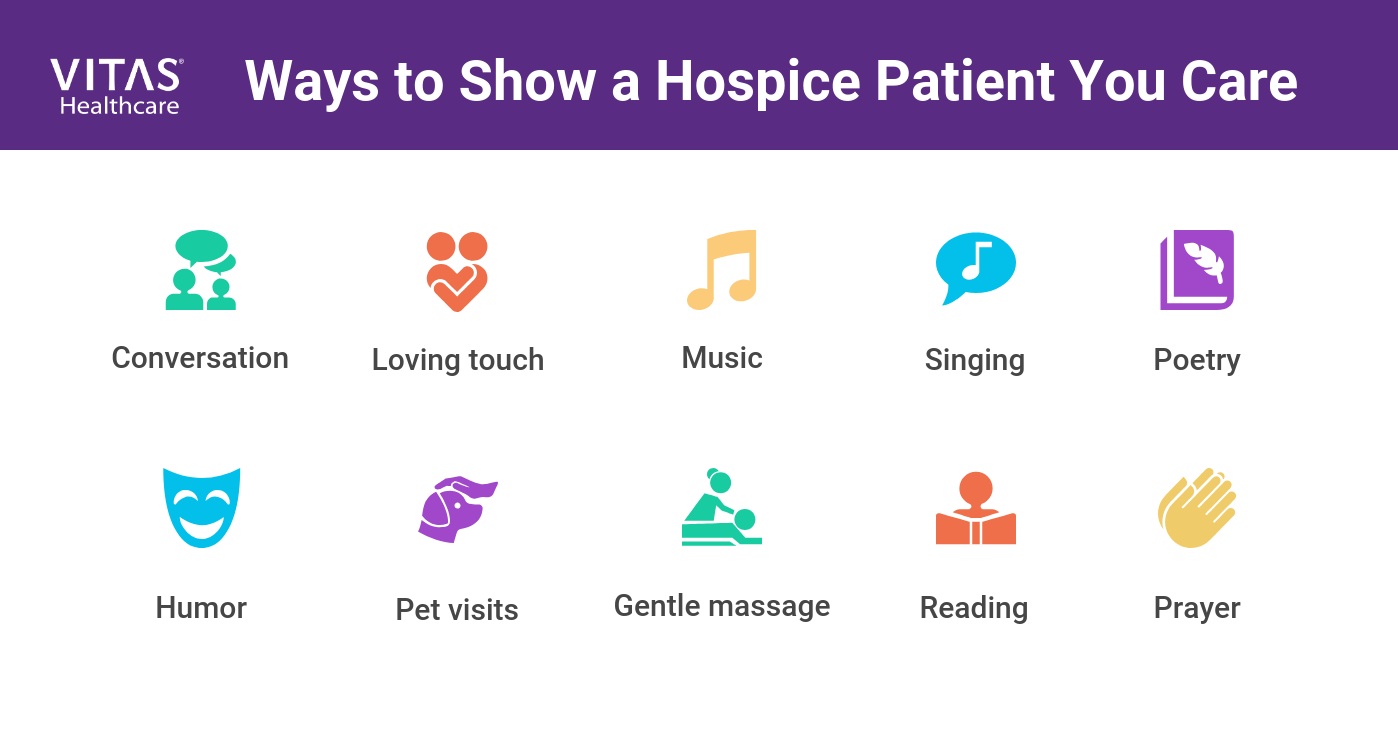
- If the patient can no longer eat or refuses to eat, provide alternative forms of support: conversation, loving touch, music, singing, poetry, humor, pet visits, gentle massage, reading, prayers or other acts of caring and love.
Craft and honor a compassionate end-of-life care plan
If your loved one can participate in a dialogue about goals of care, start having the conversation about their end-of-life wishes. The ideal time to craft an advance directive is when your loved one is healthy and able to speak their mind.
If a patient is no longer able to communicate their wishes, family members and a knowledgeable healthcare team will have to make the end-of-life decisions. The hospice team can help family members navigate the decision-making process. Hospice professionals can offer specific types of care and support around nutrition and hydration for your loved one as death nears:
- The hospice team will continue to relieve pain and manage symptoms.
- The family’s personal, cultural and religious beliefs and values around nutrition and hydration will be honored.
- Family members and caregivers will be taught how to manage thirst and hunger compassionately in a patient’s final days of life.
- In the final weeks, days and hours of life, families will be reassured that the patient’s decline and ultimate death is due to the progression of the underlying disease process and not the natural decreasing and ultimate cessation of eating and drinking.


